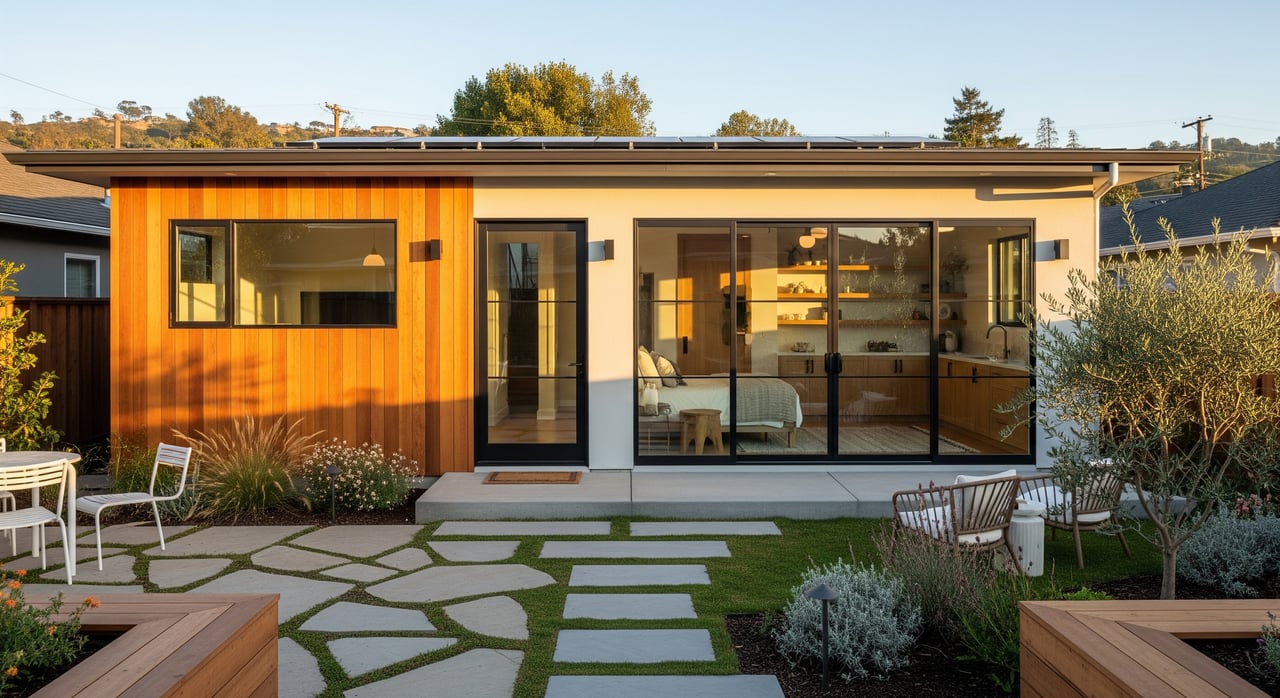
Thinking about turning your Sunnyvale backyard into an income-producing accessory dwelling unit? You’re not alone. With strong tenant demand across Silicon Valley and updated California laws that encourage ADUs, many homeowners are exploring this path to add flexibility, support multigenerational living, or boost long-term value. In this guide, you’ll learn the rules that shape ADUs in Sunnyvale, what they cost, how long they take, and how an ADU can influence rental potential and resale. Let’s dive in.
What counts as an ADU in Sunnyvale
An accessory dwelling unit is a secondary, independent home on the same lot as your primary residence. In Sunnyvale, you’ll generally see four types: detached new-builds in the backyard, attached additions to the main home, garage or interior conversions, and junior ADUs carved out of the existing footprint.
California has streamlined ADU approvals in recent years, but local zoning still governs details like setbacks, height, lot coverage, utilities, and design standards. Before you draw up plans, confirm what’s allowed on your parcel with the City. Start with the City of Sunnyvale’s Planning & Building resources for ADU-specific guidance, permits, and contacts. You can find those resources through the City’s website at the City of Sunnyvale Planning & Building Division.
The state rules that set the stage
State law encourages ADU creation and limits many barriers. The California Department of Housing and Community Development provides plain-language guidance on what cities can and cannot require.
Ministerial approvals and objective standards
Most ADUs are reviewed ministerially, which means the City uses objective standards and does not require discretionary design review in many common cases. That speeds up approvals when your plans meet code.
Parking and impact fees
State rules relax parking mandates in many situations, especially near transit and for smaller units, and cap certain impact fees for smaller ADUs. Your exact fee and parking needs depend on size, location, and site conditions.
For current statewide guidance, review the ADU resources from the California Department of Housing and Community Development.
Sunnyvale local checks before you design
Sunnyvale applies its municipal code to the specifics of your lot. Early homework saves time and money.
Zoning and allowed ADU types
Confirm that your zoning permits the ADU type you want: detached, attached, garage conversion, or a junior ADU. Many single-family parcels can include at least one ADU and sometimes a junior ADU, but details vary by lot and local code.
Setbacks, height, and lot coverage
Objective standards for setbacks, height, floor area, and lot coverage control size and placement. These numbers are parcel-specific. Ask Planning to review your concept against current standards before you finalize design.
Parking, design, and historic considerations
Parking may be reduced or waived near transit or for smaller ADUs. Some areas may also have design review or historic-preservation constraints that affect exterior finishes. The City can clarify what applies to your address.
Permits, fees, and timeline
Sunnyvale uses a ministerial pathway for most conforming ADUs. Cities commonly target 30 to 90 days for a complete ministerial review, but timing depends on application quality and workload. Confirm permit steps, plan check fees, and utility connection requirements with the City of Sunnyvale Planning & Building Division.
What to budget: ADU costs in Sunnyvale
Construction pricing in Silicon Valley is among the highest in the country. Actual bids vary by scope, site constraints, and finish level, but the following broad ranges can help you start planning:
- Conversion (garage or interior): roughly $60,000 to $200,000+ depending on plumbing, electrical, insulation, and kitchen/bath scope.
- Attached ADU (addition to the main home): roughly $150,000 to $350,000+.
- Detached new-build ADU: roughly $200,000 to $500,000+ for studio to 1–2 bed units, with high-end finishes or complex sites costing more.
- Junior ADU (within existing footprint): often $20,000 to $100,000 depending on complexity.
Plan for soft costs, utilities, and fees on top of construction. Design, engineering, permits, and utility connections can add about 20 to 40 percent to your hard costs. Smaller projects may see a higher percentage because fixed fees are a bigger share of the total.
Common cost drivers
- Site work and utilities: trenching, sewer/water tie-ins, panel upgrades, or new meters.
- Structural needs: foundation design, soils report, and engineering.
- Finishes and systems: kitchens, baths, HVAC, and window quality.
- Contingency: set aside 10 to 20 percent for changes and market volatility.
Financing options to explore
- Cash, home equity line of credit (HELOC), or home equity loan.
- Cash-out refinance.
- Renovation loans for owner-occupants where applicable.
- Portfolio or construction loans targeted at investors.
- Local or state incentive programs that may appear from time to time.
Loan products and terms change, so compare options and timelines early.
How long it takes: idea to move-in
- Research and feasibility: 1 to 3 months to confirm zoning and sketch concepts.
- Design and plans: 1 to 3 months with an architect/engineer.
- Permits: often 30 to 90 days for a complete, conforming submittal; longer if revisions are needed.
- Construction: 3 to 9 months depending on size, scope, and contractor availability.
A realistic start-to-finish timeline is 6 to 12+ months. Simple conversions can be faster; custom detached builds often take longer.
Rental potential and resale value in Sunnyvale
Sunnyvale sits in a high-demand rental market fueled by regional employment. Well-designed ADUs can attract long-term tenants looking for privacy and location, creating income that helps offset carrying costs. Short-term rental income is not guaranteed and is governed by local rules, so confirm Sunnyvale’s current short-term rental regulations before you plan on vacation or nightly rentals.
Research across California indicates that ADUs add useful rental stock and can increase a property’s marketability and value. The extent of value uplift varies with size, quality, tenant demand, and how buyers view rental potential. Academic and industry studies, including work from the Terner Center for Housing Innovation at UC Berkeley, note that ADUs often contribute to higher buyer interest, though resale price does not always rise dollar-for-dollar with build cost. Market preferences, financing, and insurance all play a role.
Taxes, insurance, and documentation basics
- Property taxes: adding an ADU can increase assessed value. For specifics, consult the Santa Clara County Assessor.
- Income taxes: rental income is taxable, and you should plan for federal and state obligations.
- Permits and records: keep your approvals and final inspection documents. Unpermitted work can complicate financing, insurance, and resale.
A practical planning approach
If you’re early in the process, treat your ADU like a mini-development project. Start with feasibility, set a target budget range, and build a cushion for soft costs and contingencies. Get multiple contractor bids with clear scopes, and confirm utility requirements before finalizing your design. As rents and interest rates shift, run a conservative pro forma so your plan still pencils if timelines or costs move.
Pre-application checklist
- Confirm zoning and permitted ADU types with Sunnyvale Planning.
- Review parcel-specific constraints: setbacks, height, lot coverage, and unit counts.
- Ask utilities about water, sewer, and electrical capacity and connections.
- Check HOA or CC&Rs for private restrictions.
- Draft a preliminary site plan and floor plan with an architect/designer.
- Seek early contractor input and preliminary pricing.
- Prepare a complete ministerial ADU application with required reports.
- Budget for soft costs and a contingency.
- Line up financing and obtain insurance quotes, including landlord coverage.
- Start construction after permit approval and schedule required inspections.
Common pitfalls to avoid
- Designing before you confirm setbacks, height, and lot coverage standards.
- Underestimating utility connection needs and costs.
- Overlooking HOA/CC&R restrictions.
- Relying on short-term rental income without verifying local rules.
- Skipping contingency in your budget and schedule.
- Proceeding with unpermitted work that can harm resale and financing.
Partner with a local advisor
An ADU can be a smart move in Sunnyvale, but the best results come from careful planning and a realistic budget. You deserve guidance that ties design choices to rental demand, financing, and long-term resale strategy. If you’re considering an ADU to improve flexibility now or to enhance your future listing, connect with a local advisor who understands Silicon Valley neighborhoods and buyer expectations.
As a Menlo Park–based, Compass-affiliated agent serving Sunnyvale and the South Bay, I help you evaluate feasibility, align the project with your goals, and position your property for success. For homeowners planning to sell, Compass Concierge can support select pre-listing improvements and presentation, and Private Exclusives can create measured, off-market exposure when timing matters.
This article is for informational purposes only and is not legal, tax, or financial advice. Requirements and fees change. Confirm current rules with the City of Sunnyvale, Santa Clara County, a licensed contractor, and qualified legal and tax professionals before you proceed.
Ready to map your ADU and resale strategy in Sunnyvale? Let’s talk about your goals and next steps with Naoko Amaya.
FAQs
What permits and approvals do I need for an ADU in Sunnyvale?
- Most ADUs follow a ministerial permit path using objective standards; confirm submittal requirements, fees, and timelines with the City of Sunnyvale Planning & Building Division.
Are parking spaces required for ADUs near transit in Sunnyvale?
- State law relaxes parking in many cases, especially near transit and for smaller units; verify your parcel’s requirements with the City of Sunnyvale Planning & Building Division.
Do California ADUs require owner-occupancy of the main home?
- State rules have limited some owner-occupancy mandates; review current statewide guidance from the California Department of Housing and Community Development and confirm any local conditions with Sunnyvale.
Can I rent my Sunnyvale ADU as a short-term rental?
- Short-term rentals depend on local ordinances and potential registration/taxes; check the latest rules with the City of Sunnyvale and align your plan accordingly.
How many ADUs can I build on a single-family lot in Sunnyvale?
- State law generally allows at least one ADU and one junior ADU on many single-family lots, but parcel-specific limits and standards apply; confirm with the City of Sunnyvale Planning & Building Division.
Will my property taxes go up if I add an ADU in Santa Clara County?
- Adding an ADU can increase assessed value; contact the Santa Clara County Assessor for details on assessments and Proposition 13 implications.
