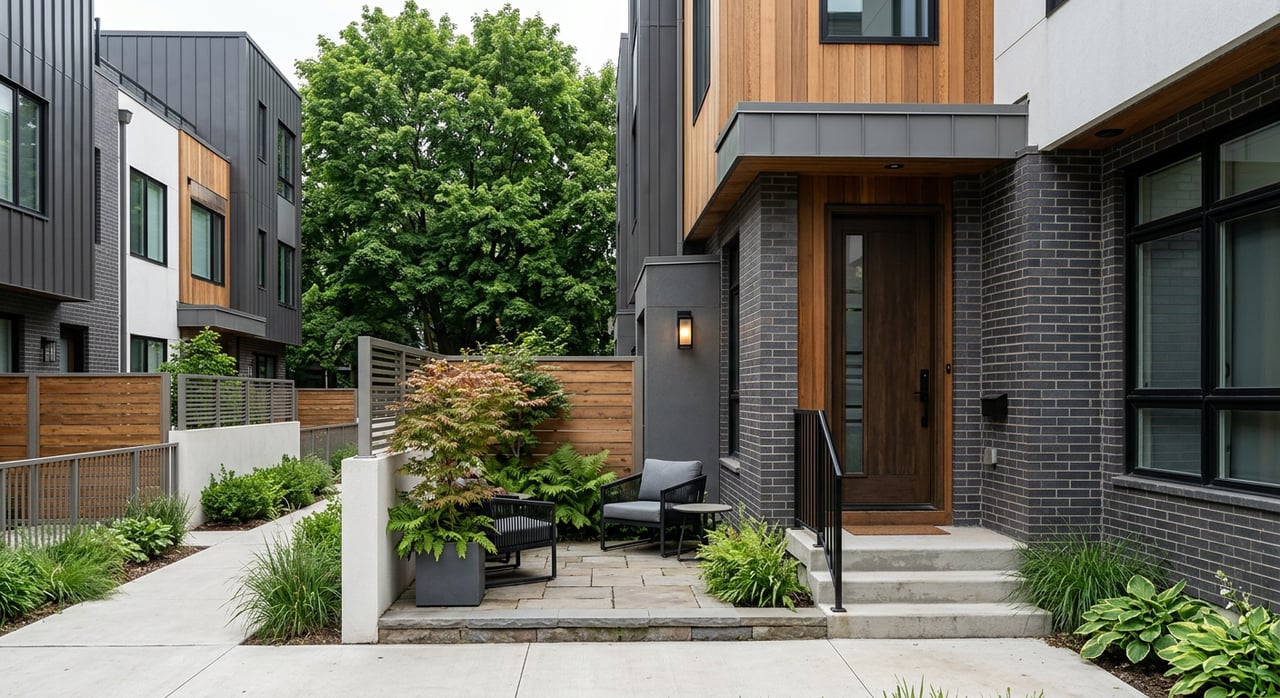
If you work in tech around Mountain View, you probably weigh your commute, walkability, and weekend lifestyle as much as floor plans and finishes. Choosing between a condo and a townhome often comes down to how you want to live day to day and how much risk and responsibility you are comfortable taking on. In this guide, you will learn what you actually own in each option, how HOA rules and reserves can change your total cost, what lenders and insurers look for, and where each option shines in Mountain View. Let’s dive in.
Condo vs. townhome: what you actually own
Legal form matters more than shape
In California, “condominium” is a legal form of ownership, not a building shape. You own a defined unit plus a shared interest in common areas governed by recorded CC&Rs and an HOA. “Townhome” describes a style of attached housing that can be legally a condo or a fee-simple lot in a planned unit development. Your rights and responsibilities depend on the recorded ownership form, not the façade. You can confirm the legal form in the preliminary title report and in the seller’s disclosures. See the California Land Title Association’s consumer overview of common forms of title for context on these differences (CLTA guide).
What you usually get with a condo
Most Mountain View condos are mid-rise or garden-style. You typically own the interior space. The HOA usually manages the building exterior, roof, elevators, and common areas, along with amenities like a gym or pool in some complexes. HOA dues often include exterior maintenance, some common utilities, and the master insurance policy for the structure. Unit owners carry their own condo (HO-6) policy for interiors and personal property.
What you usually get with a townhome
Townhomes are often multi-level with direct garage access and a bit of private outdoor space. If the townhome is fee simple in a PUD, you may own the land beneath the unit and carry more responsibility for exterior maintenance. If the townhome is legally a condo, the HOA often handles more of the exterior and structure. Appraisers and lenders also treat fee-simple PUDs differently than condo-titled projects, which can affect loan options and timelines. Always verify the recorded form before you write an offer.
HOA health: the hidden driver of cost and risk
Davis-Stirling sets the rules
Most local condos and townhome HOAs follow California’s Davis-Stirling Common Interest Development Act. The Act requires annual budgets, financial disclosures, access to records, and a reserve study. As a buyer, you should request the full HOA packet early: budgets, reserve study, insurance declarations, and recent meeting minutes. This disclosure framework exists to help you understand the HOA’s financial health before you commit. You can review a summary of Davis-Stirling requirements through the Community Associations Institute (CAI overview).
Reserves and special assessments
The reserve study and current funding level are key. Low reserves raise the chance of special assessments that can add large, one-time costs for owners. Review the percent funded, recent special assessments, delinquency rates, and the HOA’s latest bank and financial statements. Meeting minutes can surface upcoming capital projects that are not yet fully funded. A strong reserve position reduces the risk that your monthly costs will jump.
Emergency assessments after SB 900
A 2025 change to California law, SB 900, expanded HOA emergency powers in certain situations where essential utility systems fail. This can allow emergency assessments or loan mechanisms that affect owners’ out-of-pocket exposure. Check the latest budget disclosures and governing documents for the HOA’s policies on emergency assessments or loans, and ask for details if any were used or are contemplated. For a plain-language summary of SB 900’s impact on associations, review this legal explainer (SB 900 summary).
Balcony and elevated walkway inspections (SB 326/SB 721)
California requires periodic inspection of exterior elevated elements such as balconies and elevated walkways in many multi-unit buildings. For common interest developments like condos, SB 326 sets requirements around inspection and reporting schedules. Compliance can trigger repair projects that need reserve funding or special assessments. Ask whether the HOA has completed the Exterior Elevated Elements inspection, what was found, and how repairs are budgeted (SB 326 text).
Quick buyer checklist for HOA diligence
- Request the full HOA packet: annual budget, reserve study with percent funded, insurance declarations, and 12 to 24 months of meeting minutes.
- Ask about any pending or recent special assessments and the current reserve balance.
- Confirm whether the required balcony and elevated walkway inspections are complete and how any repairs will be funded.
- Review any open litigation, which can affect financing eligibility and marketability.
Financing and appraisal: why ownership form affects loans
FHA/VA and project approval for condos
Many low down payment programs for condos require project-level approvals or certifications. If a condo project is not approved, certain loan options may not be available, or they may require more documentation and time. Fee-simple townhomes in PUDs generally face fewer project-level hurdles. If you plan to use an FHA or VA loan, confirm project eligibility with your lender early.
Appraisal form differences
Condo units are typically appraised on the Individual Condominium Unit Appraisal Report (Form 1073). Fee-simple single-family and PUD properties use standard appraisal forms such as Form 1004. This difference can affect underwriting and timelines, especially in complex projects. See Fannie Mae’s guidance on appraisal forms for more detail (Fannie Mae appraisal forms).
Insurance: master policy vs. HO-6
How coverage is usually split
Condo associations often carry a master policy for the building exterior and common areas. You carry an HO-6 policy for your unit’s interior finishes, personal property, liability, and loss assessment coverage. If the HOA master policy has a high deductible, you should confirm that your HO-6 includes enough loss assessment coverage to protect you if a covered claim triggers a shared deductible. Townhome coverage can vary based on ownership form, so confirm whether your policy needs to insure any part of the structure. For a clear primer on condo coverage and HO-6 protections, review this overview (condo insurance guide).
What to request
- The HOA master policy declarations, including limits and deductibles, and proof of liability and fidelity coverage.
- Clarification on whether the HOA’s policy is walls-in or covers only common areas.
- Your insurer’s written confirmation that your HO-6 or homeowners policy matches the ownership form and fills any deductible or interior-structure gaps.
Where each option shines in Mountain View
Old Mountain View and Castro Street
If you want to live car-light, downtown Mountain View delivers. Condos within a short walk of Castro Street put you close to dining and the Mountain View Transit Center for Caltrain and VTA connections. Expect smaller private outdoor areas and more shared amenities. The tradeoff is strong walkability and one of the easiest multi-modal commutes on the Peninsula.
Shoreline and North Bayshore
If your goal is a fast bike or walk to the North Bayshore campuses, newer townhome-style options near Shoreline can shine. You will often see private garages and decks, with less immediate access to downtown restaurants. A recent mixed-use project, the Residences at Shoreline Gateway, highlights how developers are adding for-sale condos and townhome-style units aimed at nearby employees (Shoreline Gateway project).
Transit corridors: San Antonio, El Camino, and the station area
Mid-rise and garden-style condos near San Antonio and around the Mountain View station provide direct rail access for north-south commutes. If you need a reliable Caltrain ride to the Peninsula or San Francisco, prioritizing proximity to the station can shorten your total trip time (Caltrain station info).
Budgeting: prices, dues, taxes, and EV readiness
Typical prices as of early 2026
Recent aggregator snapshots from early 2026 put Mountain View’s median home sale price roughly in the 1.6 to 2.0 million dollar range, with variation by property type and month. Townhomes often trade at a premium to similar-size vertical condos due to private garages and more house-like features. Always compare recent local comps by building and by floor plan.
HOA dues: what the range can tell you
HOA dues vary with age, amenities, and building systems. Smaller or older garden-style communities commonly range around 200 to 600 dollars per month. Newer mid-rises with elevators, gyms, structured parking, and on-site management commonly run 700 to 1,200 dollars per month or more. Always confirm what dues include, such as water, trash, earthquake coverage, or master-policy deductible contributions. For a broad overview of local housing costs and how amenities influence dues, see this neighborhood cost reference (Mountain View housing costs overview).
Property taxes and local assessments
Under California’s Proposition 13, the base property tax rate is roughly 1.0 percent of assessed value, plus voter-approved local assessments that vary by parcel. Santa Clara County publishes the official tax rate book each fiscal year. Ask for the current tax rate and the list of special assessments tied to the specific property before you finalize your budget (Santa Clara County tax rate book).
EV charging and building codes
New construction and many significant remodels in Mountain View must meet updated CalGreen and local reach codes that increase EV readiness. Newer condo and townhome developments are more likely to have EV-ready wiring or a share of Level 2 charging spaces, which can improve long-term convenience if you drive an EV. You can review the city’s current green building and reach code information here (Mountain View reach codes).
Quick decision guide for tech buyers
Choose a condo if you want:
- Strong walkability to Castro Street and the Mountain View Transit Center.
- Lower responsibility for exterior maintenance and building systems.
- Amenities like a gym, secure lobby, and elevator access.
Choose a townhome if you want:
- A private garage, more separation between living and sleeping areas, and some outdoor space.
- A faster bike or walk to North Bayshore campuses.
- Often fewer project-level lending hurdles when the townhome is fee simple in a PUD.
If you are comparing Mountain View with East Bay locations like Oakland, Berkeley, or Hayward, expect longer and more complex transit commutes to Mountain View. Many East Bay to Peninsula trips require a BART to Caltrain transfer, commonly at Millbrae, which adds time and an extra connection.
How I help you compare options
The best choice balances your commute, budget, and risk tolerance. I help you clarify the ownership form, collect and review the HOA packet and reserve study, coordinate with your lender on project eligibility, and confirm insurance coverage fits the building’s master policy. You get clear, practical next steps and local context so you can buy with confidence.
If you are ready to compare specific buildings and floor plans, or you want a second set of eyes on an HOA packet, reach out. I would love to help you find the right fit in Mountain View.
Ready to talk strategy for your search? Connect with Naoko Amaya for calm, data-informed guidance tailored to your goals.
FAQs
What is the main difference between a Mountain View condo and a townhome?
- A condo is a legal form where you own a unit plus shared common areas under an HOA, while a townhome is a building style that can be either condo-titled or fee simple in a PUD; confirm the recorded form in the title report (CLTA guide).
How do HOA reserves affect your total cost when buying in Mountain View?
- Low reserves raise the chance of special assessments, which can add large, one-time costs; review the reserve study, percent funded, recent assessments, and meeting minutes to spot risks (CAI overview).
What does SB 326 mean for condo balconies and walkways?
- SB 326 requires periodic inspections of exterior elevated elements in many condo developments; ask for the inspection report and how repairs are budgeted since findings can affect dues and assessments (SB 326 text).
Can you use FHA on a Mountain View condo that is not project-approved?
- Many FHA scenarios require project approval; some limited single-unit approvals may exist but are document intensive, so check project eligibility with your lender early in the process.
What insurance documents should you review before purchasing a condo or townhome?
- Request the HOA master policy declarations page for limits and deductibles, confirm whether coverage is walls-in, and ensure your HO-6 or homeowners policy includes appropriate loss assessment coverage (condo insurance guide).
Are HOA dues higher for condos near Castro Street than for townhomes?
- Dues often rise with amenities and elevators typical of mid-rise condos; many townhome communities have lower dues, but always check what is included since coverage scope and services vary by community.
How does the commute differ between Castro Street and North Bayshore?
- Castro Street condos maximize walkability and access to the Mountain View Transit Center for Caltrain and VTA, while North Bayshore townhome areas favor short bike or walk commutes to local campuses (Caltrain station info).
Are EV chargers common in newer Mountain View developments?
- Newer projects are more likely to be EV-ready due to CalGreen and local reach codes that require wiring or a share of Level 2 spaces; confirm available charging and any related fees with the HOA (Mountain View reach codes).
How do property taxes work for condos and townhomes in Santa Clara County?
- Expect a base rate near 1.0 percent of assessed value plus parcel-specific voter-approved assessments; verify the current rate and assessments for the address with the county tax rate book (tax rate book).
If you live in the East Bay and work in Mountain View, what is the typical transit path?
- Many riders use BART and transfer to Caltrain, commonly at Millbrae; plan for at least one transfer and a longer total travel time compared with living near the Mountain View Transit Center.
