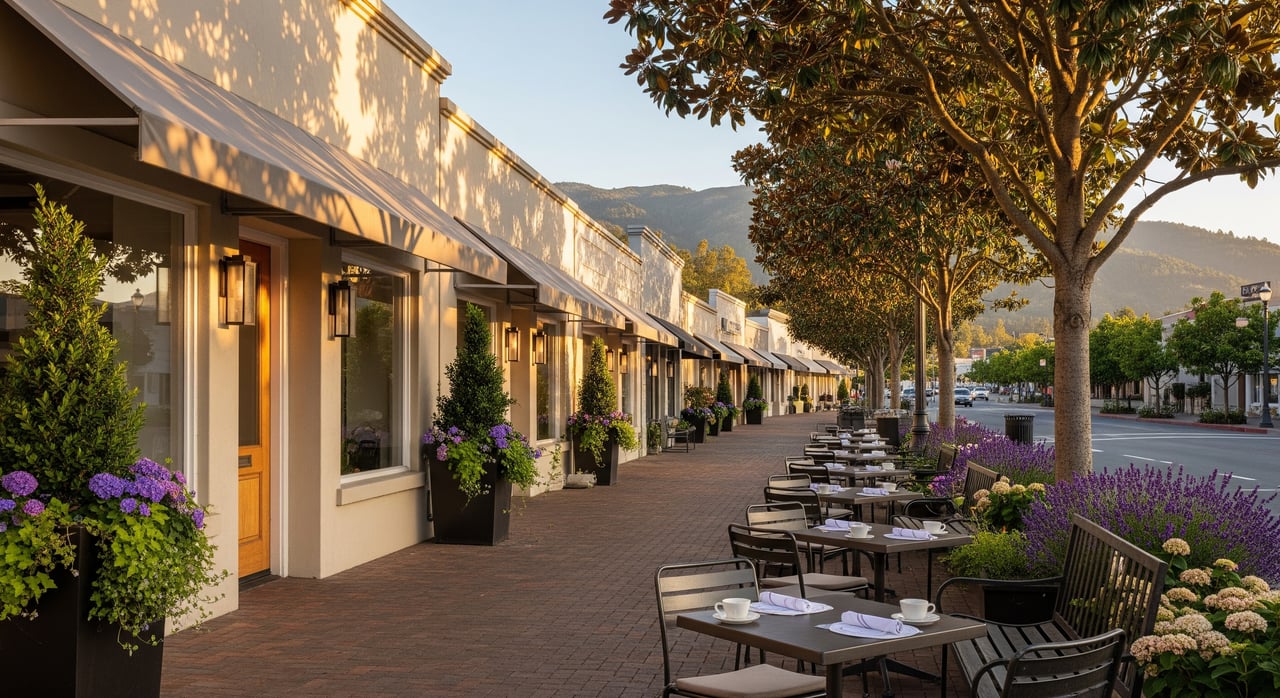
Wondering what day-to-day life feels like in a quiet, walkable pocket of Silicon Valley with a true small-town main street? If you are a tech professional or move-up buyer, Saratoga Village gives you calm residential living with easy access to parks, culture, and top employment centers. In this guide, you will learn how the Village flows during the week, what to expect from housing, where to eat and unwind, and how to plan commutes and school logistics. Let’s dive in.
Saratoga Village at a glance
Saratoga sits on the western edge of Silicon Valley at the base of the Santa Cruz Mountains. The city is known for its quiet, residential character and a compact downtown called Saratoga Village. The local government focuses on scenic preservation and a low-density feel to maintain that small-town ambiance. You can learn more about city priorities and amenities by visiting the City of Saratoga official website.
The Village centers on Big Basin Way and nearby streets. Here you will find boutiques, salons, cafés, wine bars, and neighborhood services within a pleasant, walkable stretch. Compared to larger downtowns in the Valley, the pace is calm and neighborly, which is a big part of the appeal if you want convenience without an urban rush.
Housing near the Village
Expect a market anchored by single-family homes on medium to larger lots. Common styles include ranch, mid-century modern, Craftsman, Spanish or Mediterranean, and renovated contemporaries. Condos and townhomes exist but are less common than detached homes in and around the Village.
Inventory often runs tight relative to demand, especially for move-in-ready homes near the core. Many buyers add value through thoughtful renovations or additions, depending on city regulations. The city’s preservation priorities keep density lower, which helps maintain the residential character you see on a drive through the area.
Village vs. hillside tradeoffs
- Village proximity. Walk to dining, coffee, salons, and small services. Lots are smaller on average, and daily errands are easier on foot.
- Hillside living. Larger lots, more privacy, and bigger views closer to the Santa Cruz Mountains. You will likely drive farther for groceries and school drop-offs.
Practical property checks
- Terrain and sidewalks. Some areas have steep grades or limited sidewalks. Walk the route you would use for daily errands to confirm comfort.
- Utilities and drainage. On older lots, ask inspectors to review sewer laterals, drainage, and any hillside considerations.
- Fire and weather risk in hills. Review local fire agency and public works guidance before you remove contingencies.
Daily rhythm: dining, coffee, shopping
Saratoga Village gives you a comfortable Main Street vibe for morning coffee, quick lunches, and dinner with friends. Weekend mornings often start with a café stop and a stroll past boutiques. In the evenings, restaurants and wine bars set a relaxed tone. Seasonal events and community gatherings add to the rhythm, with schedules posted by the City of Saratoga.
Nearby towns like Los Gatos and Campbell broaden your options for late-night dining or specialty cuisine. Many residents make short drives for date nights while keeping their day-to-day errands close to home.
Cultural anchors you will love
- Hakone Estate & Gardens. One of the oldest Japanese gardens in the Western Hemisphere, Hakone hosts events and offers a peaceful escape near the Village. Check visiting hours and programming on the Hakone Estate & Gardens site.
- Montalvo Arts Center at Villa Montalvo. This historic villa hosts concerts, exhibitions, artist residencies, and family-friendly programs. Browse performances and trails on the Montalvo Arts Center website.
- The Mountain Winery. A dramatic hillside venue known for seasonal concerts and tastings. See the latest lineup on the Mountain Winery site.
These venues bring high-quality programming to your backyard. You can enjoy a low-key weekday routine, then catch a concert or art event without crossing the Valley.
Parks and outdoor access
If you love the outdoors, Saratoga is a strong fit. Local parks and trails support everyday walks and jogs, while larger preserves are a short drive away.
- Santa Clara County Parks. Explore hiking, fishing, and boating close by, including popular spots around Lexington Reservoir. Get details from Santa Clara County Parks.
- Midpeninsula Regional Open Space. Trailheads into Sierra Azul and Rancho San Antonio give you panoramic views and varied terrain. Plan your outing with the Midpeninsula Regional Open Space District.
Weekends often mean a quick morning hike or a full afternoon in the Santa Cruz Mountains. Families also find plenty of classes, youth sports, and seasonal outdoor events through local parks and recreation programs.
Getting around and commutes
Saratoga is primarily car oriented. You will usually drive to major corridors like Highway 85 and Interstate 280. The upside is a quieter street grid without a freeway running through the city. The tradeoff is a short drive to reach regional highways.
Public transit is available, but plan for multi-modal trips. Saratoga does not have a Caltrain station, so many commuters drive to nearby stations or use bus connections. For routes and schedules, check the Santa Clara Valley Transportation Authority and Caltrain.
Typical commute times vary with traffic and your destination. Light-traffic drives to Cupertino or Sunnyvale can be around 20 minutes. Longer peak-hour drives to, say, Mountain View or Palo Alto can stretch to 45 minutes or more. For flights, San José Mineta International is the closest major airport, with SFO and OAK within a longer drive depending on traffic.
Schools and family life
Public schools in Saratoga are served by the Saratoga Union School District for elementary and middle grades, and the Los Gatos-Saratoga Union High School District for high school. Local public schools have strong reputations with consistent performance on state indicators. You can review statewide data and frameworks at the California Department of Education.
Families often plan ahead for childcare and enrichment. Preschool and after-school program slots can be competitive in higher-cost suburbs, so it pays to research options and waitlists early. The broader Bay Area offers robust enrichment in music, STEM, and sports, with many providers within a short drive.
Lifestyle tradeoffs for tech professionals
Every neighborhood has pros and cons. In Saratoga Village, the balance looks like this for many tech buyers.
What you will likely appreciate
- Quiet, upscale residential environment with a compact, walkable Village core.
- Access to arts and culture through Hakone, Montalvo, and Mountain Winery.
- Weekend-ready outdoor options close to home, from Lexington Reservoir to Midpen trails.
- Proximity to tech hubs while enjoying privacy, yards, and a small-town feel.
What to plan around
- High housing costs and fewer entry-level options near the Village.
- Car use for many errands and most commutes outside the Village core.
- Limited supply of new-build, high-density developments due to preservation priorities.
Buyer tips for Saratoga Village
Use this quick checklist to align your wish list and timeline with how the Village lives.
- Define your daily flow. List the top three places you want to walk to in the Village. Then test those routes in person.
- Compare Village vs. hills. Decide if walkability or lot size and privacy matter more to you. Factor in school and grocery driving times.
- Budget for updates. Many homes are renovated over time. Plan for upgrades that fit your style and energy efficiency goals.
- Verify infrastructure. Order inspections and review city and county records for drainage, sewer laterals, and hillside considerations.
- Test the commute. Drive your route at the times you expect to travel. Note freeway access and any chokepoints.
- Plan for schools and childcare. Review district boundaries and program options early. Use the California Department of Education site for statewide context.
- Work with a local advisor. A consultative agent can surface off-market opportunities and manage timing, prep, and negotiation.
Ready to explore the Village?
If Saratoga Village sounds like the right fit, start with a walk down Big Basin Way, tour open spaces on the weekend, and test your commute during the week. When you are ready to discuss timing, budget, or a move-up sale and purchase, connect with a local expert who can guide you from strategy to closing. Reach out to Naoko Amaya to plan next steps.
FAQs
Is Saratoga Village walkable for daily errands?
- Yes, the Village core is compact and pedestrian friendly for coffee, dining, and small services, while most other Saratoga neighborhoods are primarily car oriented.
How long are commutes from Saratoga to tech hubs?
- Many drives to Cupertino or Sunnyvale can be around 20 minutes in light traffic, while peak-hour trips to farther hubs like Palo Alto can exceed 45 minutes.
What home styles are common near the Village?
- You will find ranch, mid-century, Craftsman, Spanish or Mediterranean, and renovated contemporary homes, with condos and townhomes in smaller numbers.
What outdoor options are close to Saratoga?
- Local parks and nearby preserves offer hiking, biking, and reservoir access, including Lexington Reservoir, Sierra Azul, and Rancho San Antonio within short drives.
How are public schools in Saratoga?
- Local public schools have strong reputations and consistent performance on state indicators, and families often research district details on the California Department of Education site.
